OSTrails at CONFOA 2026: Advancing FAIR Data Assessment and Machine-Actionable DMPs

The Portuguese Pilot of OSTrails, led by UMinho and FCT, actively participated in the Lusophone Conference on Open Science (CONFOA 2026) to showcase some of the developments and implementations carried out within the project. Bringing together the portuguese-speaking Open Science community, the conference provided a forum to present and discuss recent advances, initiatives, and experiences in Open Science. The event took place in Faro, Portugal, from 6 to 9 October 2026. The pilot's participation included the organisation of a workshop, the presentation of a poster, and a live demonstration aimed at sharing key outcomes and developments arising from its activities.

The workshop focused on the FAIRness of datasets published in data repositories, providing an in-depth overview of the design of FAIR benchmarks and metrics, as well as demonstrations of the FAIR Champion and OpenAIRE FAIR Validator tools for assessing the FAIRness of datasets and repositories, respectively. It aimed to strengthen the capacity of research data repository curation and management teams to evaluate datasets' compliance with the FAIR Data Principles. The session also presented the contributions of the OSTrails project to the development of the FAIR Interoperability Framework (FAIR-IF), which was designed to harmonise FAIR assessments through a common model and vocabulary, enabling consistent and comparable results across different assessment tools. In addition, it highlighted OSTrails' support for the development of more robust FAIR metrics and assessment tools tailored to the specific needs of different research communities and digital object types.
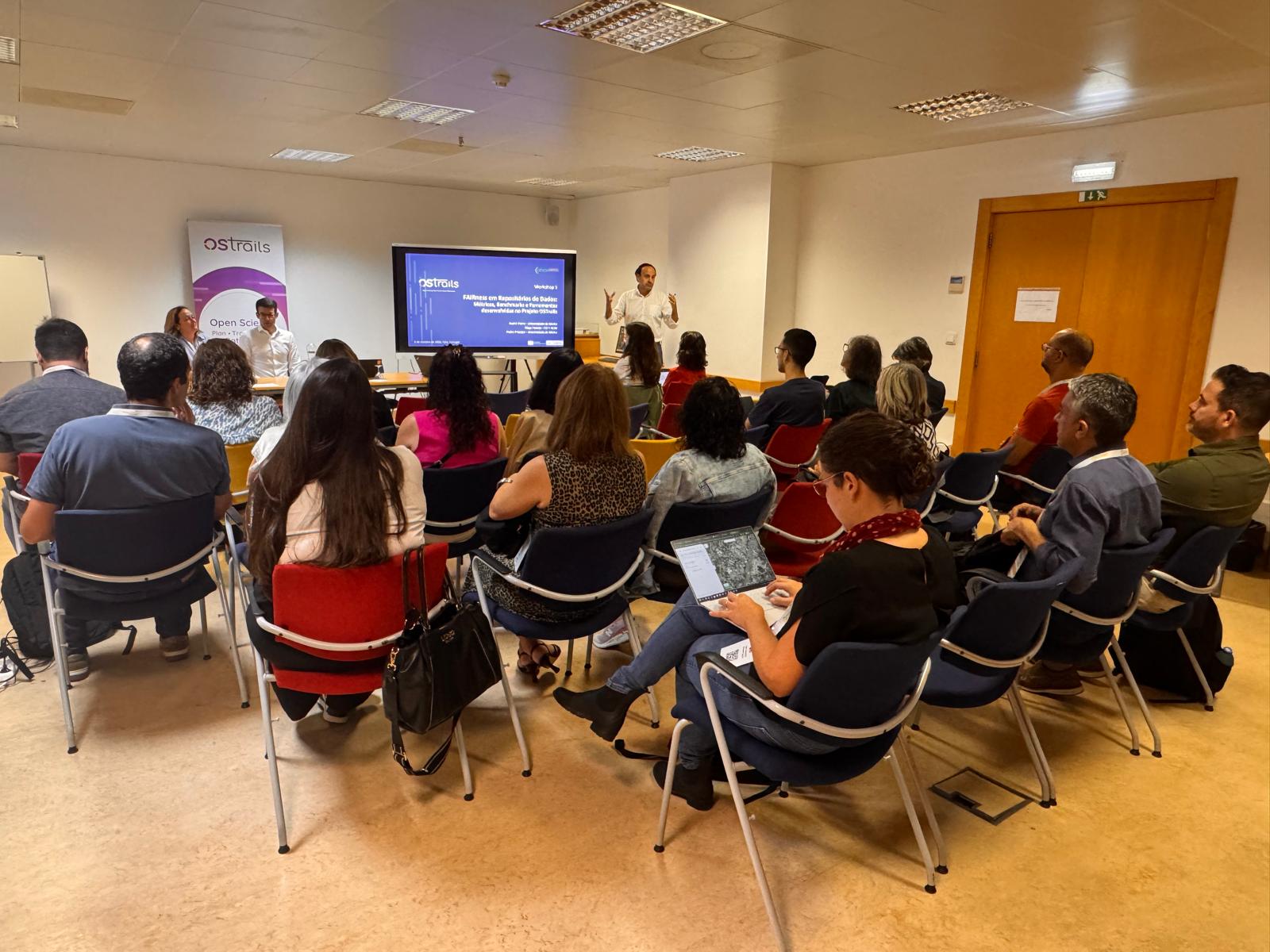
workshop 2026 10 08 at 10.21.20

The poster focused on operationalising Machine-Actionable Data Management Plans (maDMPs) within the OSTrails project, illustrating the journey from theory to practice. It outlined the process of designing and implementing a machine-actionable data management plan using the OSTrails framework, with particular emphasis on the experiences and lessons learned from the Portuguese pilot.
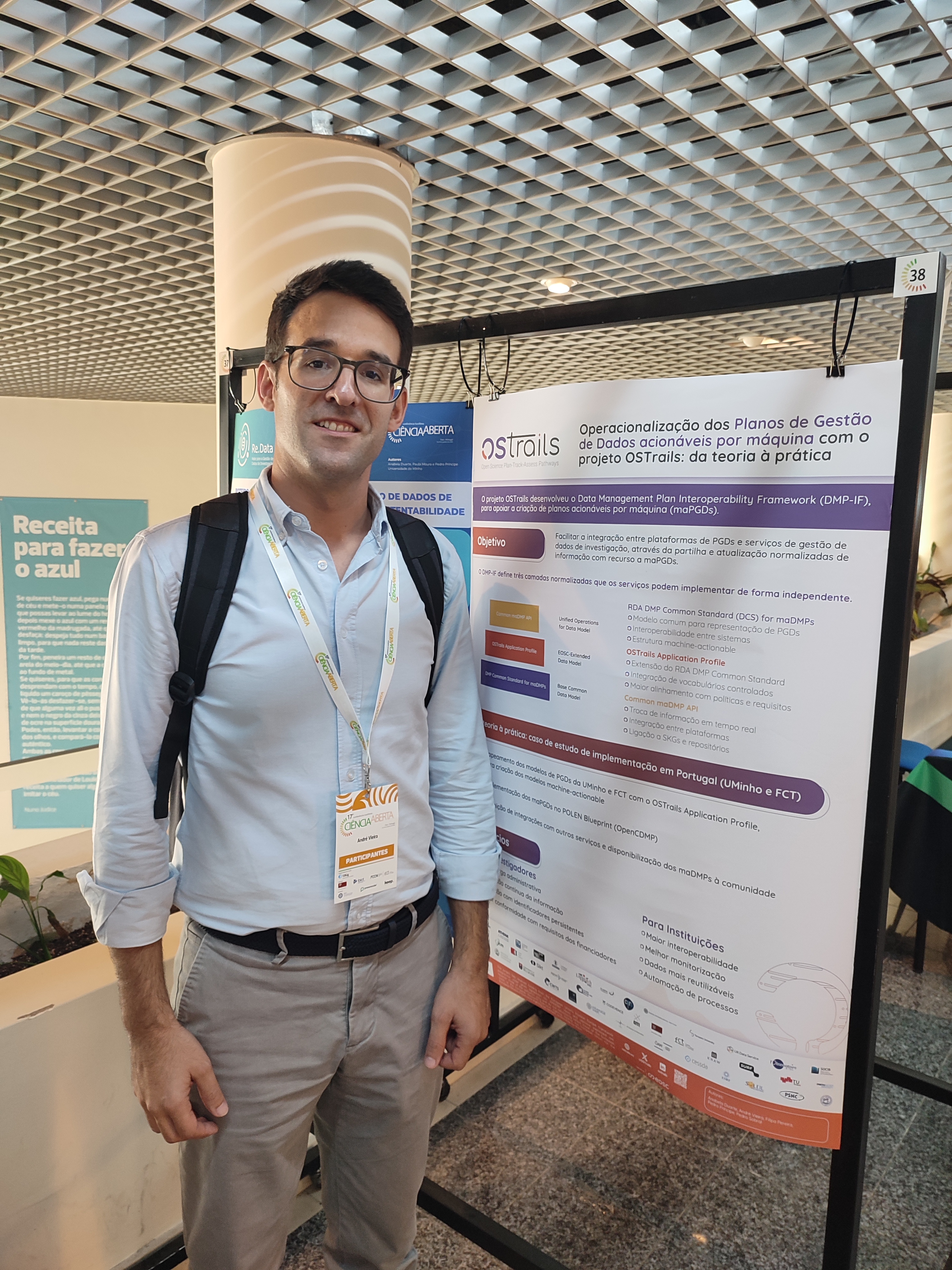
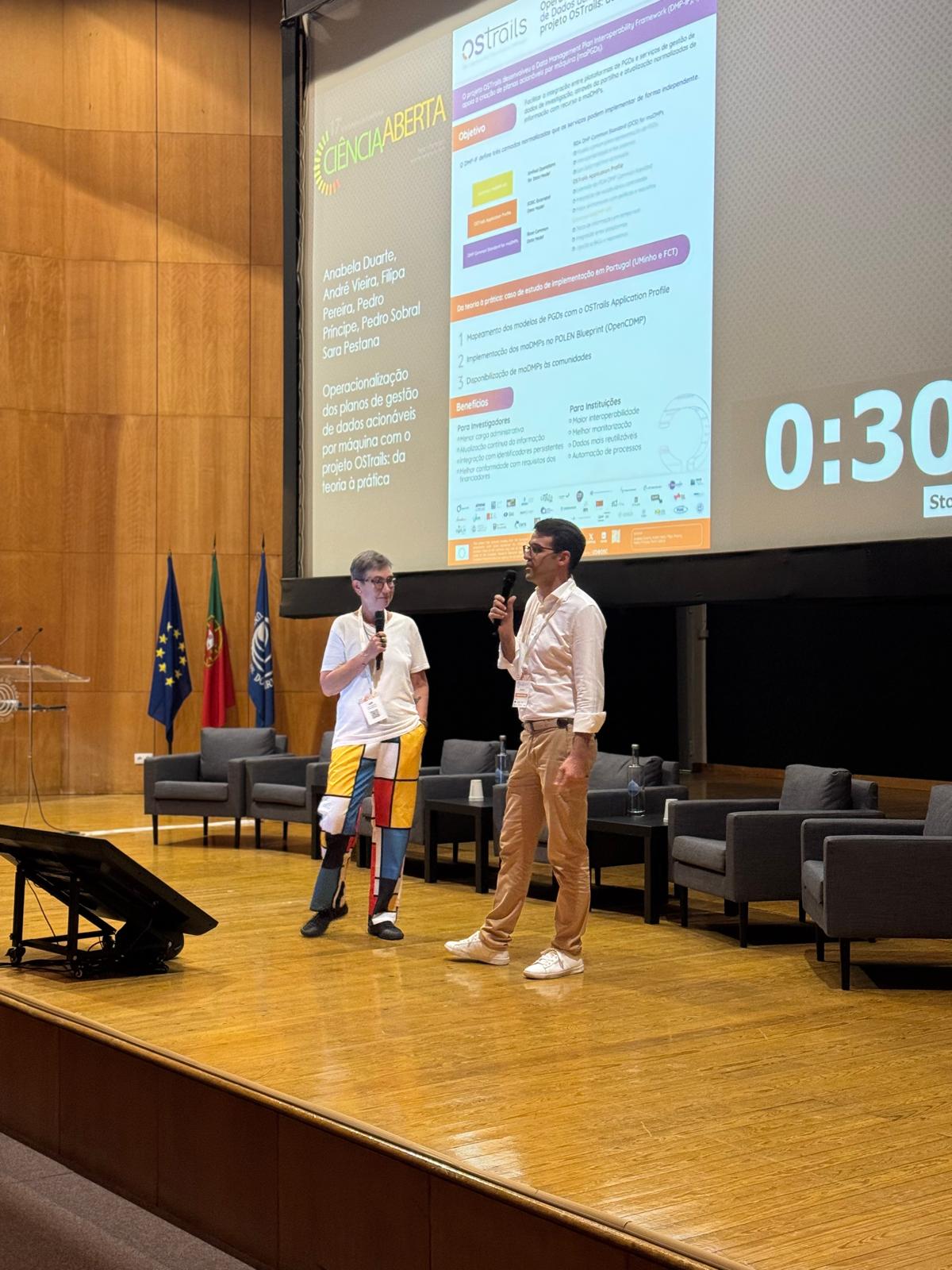
                                 poster 2026 10 06   poster 2026 10 08 at 15.55.50

Finally, a live demonstration of the FAIR Champion tool was delivered, showcasing the FAIR assessment of datasets deposited in data repositories and highlighting its practical application for evaluating dataset FAIRness using community-specific benchmarks tailored to the needs of different research communities.
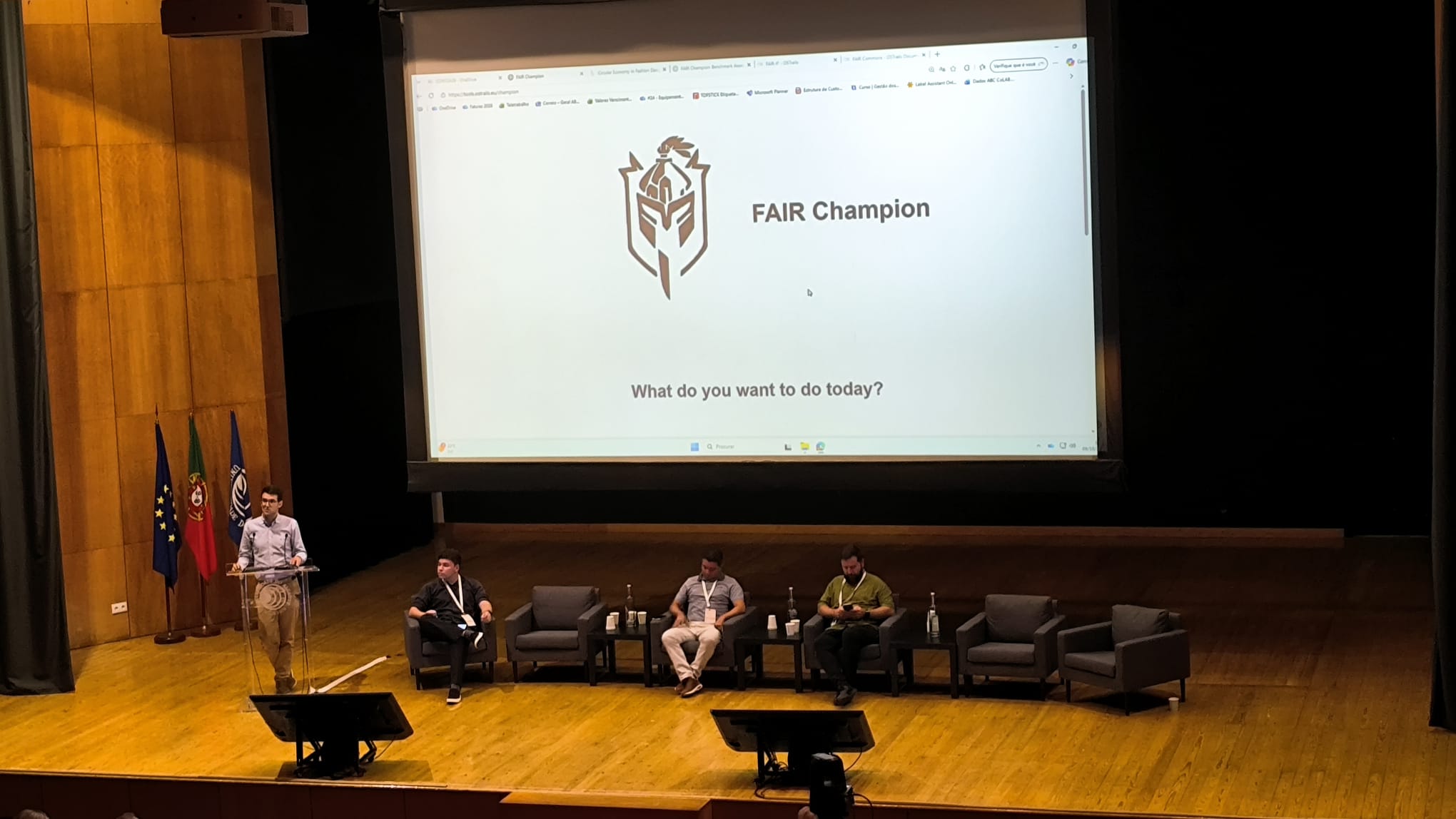
demo 2026 10 09 at 11.53.54

EXplore the poster here!

  • Created on .
  • Last updated on .
  • Hits: 21

OSTrails workshop on the connection of DMPs and ELNs

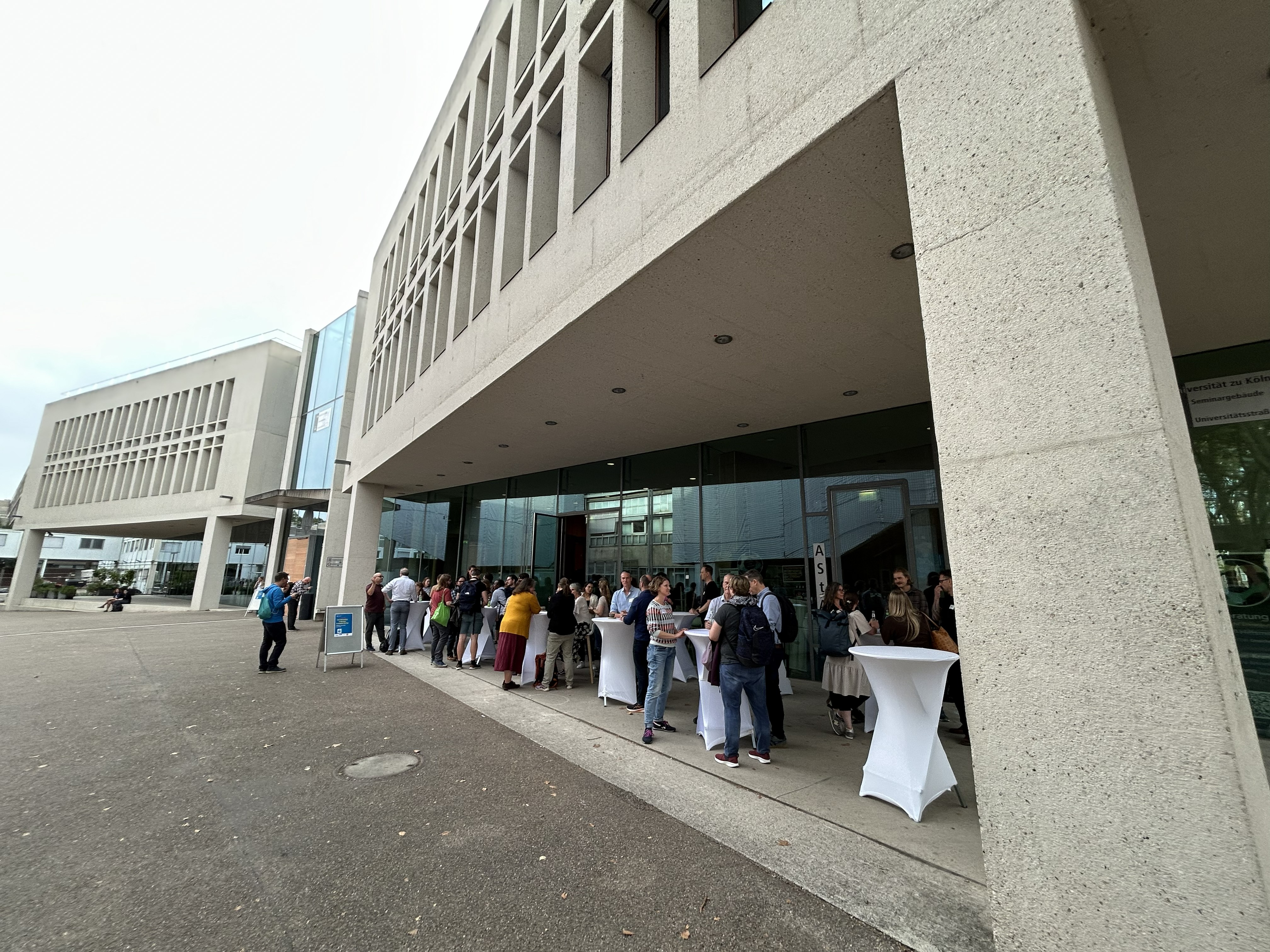
On September 28–29, 2026, the fifth annual Data Stewardship in Germany Community Meeting (DSgG, formerly ‘Data Stewardship goes Germany’) took place at the University of Cologne.

IMG 7753 1   Copy

Under the motto “DSgG - from going to growing”, The meeting brought together a diverse community of people working in or interested in research data management, including researchers, data stewards, librarians, and service providers. The programme featured a range of formats, including presentations, Ignite Talks, a poster session, and workshops.

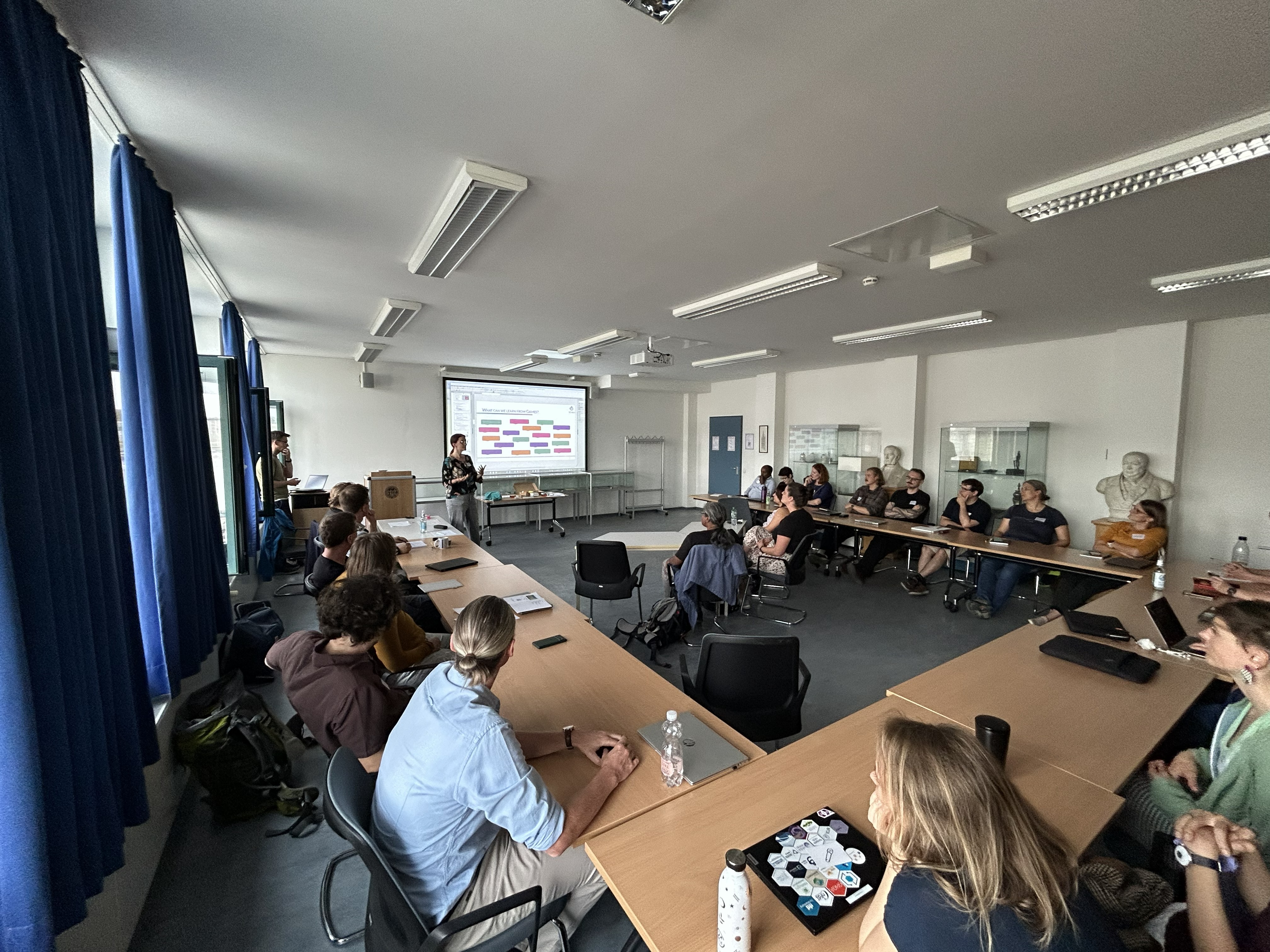
The German national OSTrails pilot organised one of these workshops, entitled “From Planning to Working: Using OSTrails interoperability frameworks to connect RDMO and electronic lab notebooks”. During the 90-minutes workshop Fabian Fink, Patrick Jüptner, Sabine Schönau, and Dominik Schmitz, all from the University Library at RWTH Aachen University, first provided an overview of OSTrails’ work and vision, the Research Data Management Organiser (RDMO), a platform for managing data management plans (DMPs), as well as two electronic laboratory notebooks (ELNs): eLabFTW and Chemotion ELN.

During the hands-on part of the workshop, participants had the opportunity to test the tools, discuss how DMPs and ELNs could be connected, and provide feedback.

The German national OSTrails pilot aims to transfer relevant information between RDMO and the respective ELNs and vice versa by using the machine-actionable data management plan (maDMP) format. This approach serves as a prototype for enabling interoperability between DMP and ELN tools. 

IMG 7741 1

  • Created on .
  • Last updated on .
  • Hits: 21

Community-driven DMP evaluation metrics presented at TPDL 2026

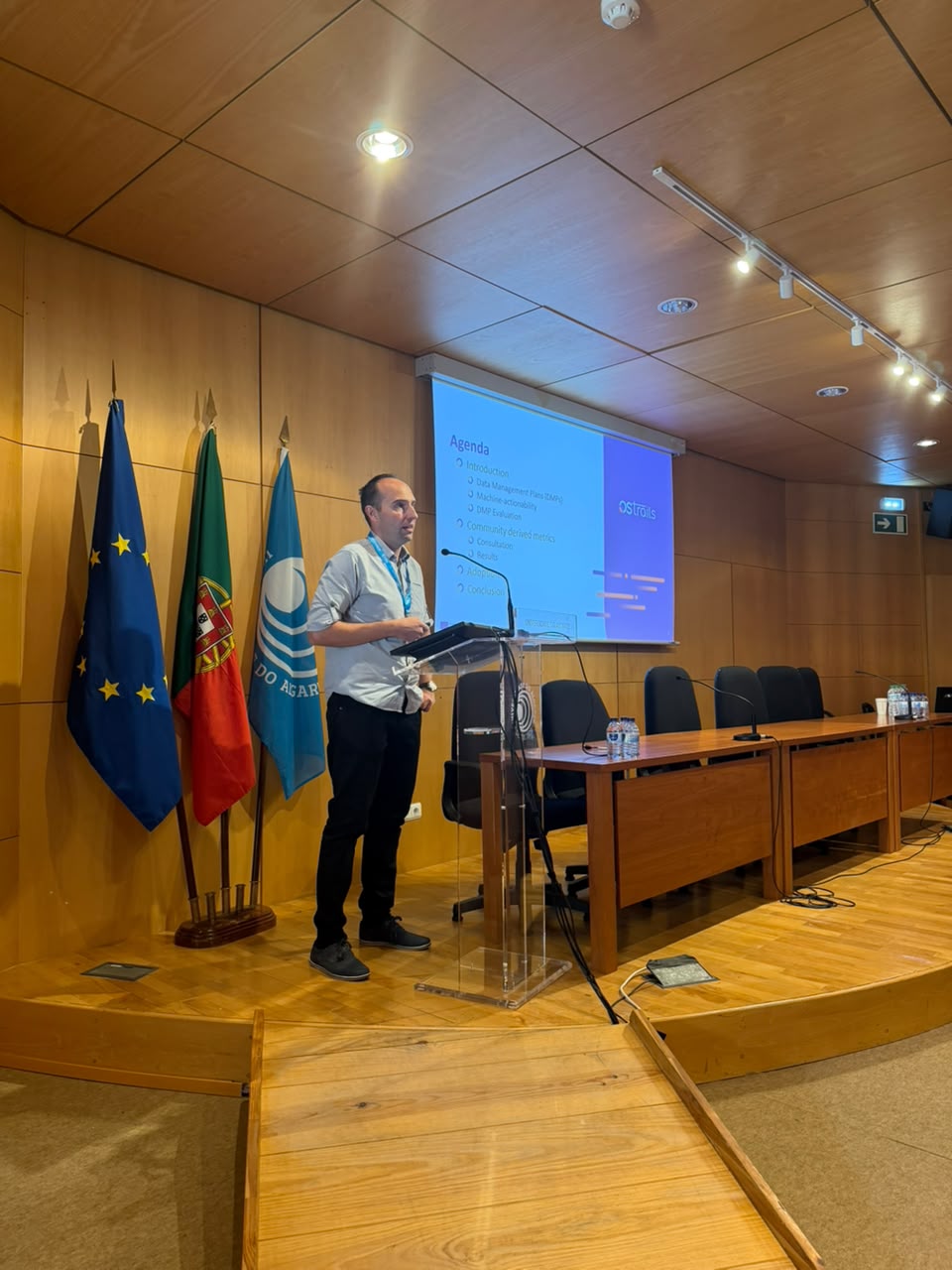
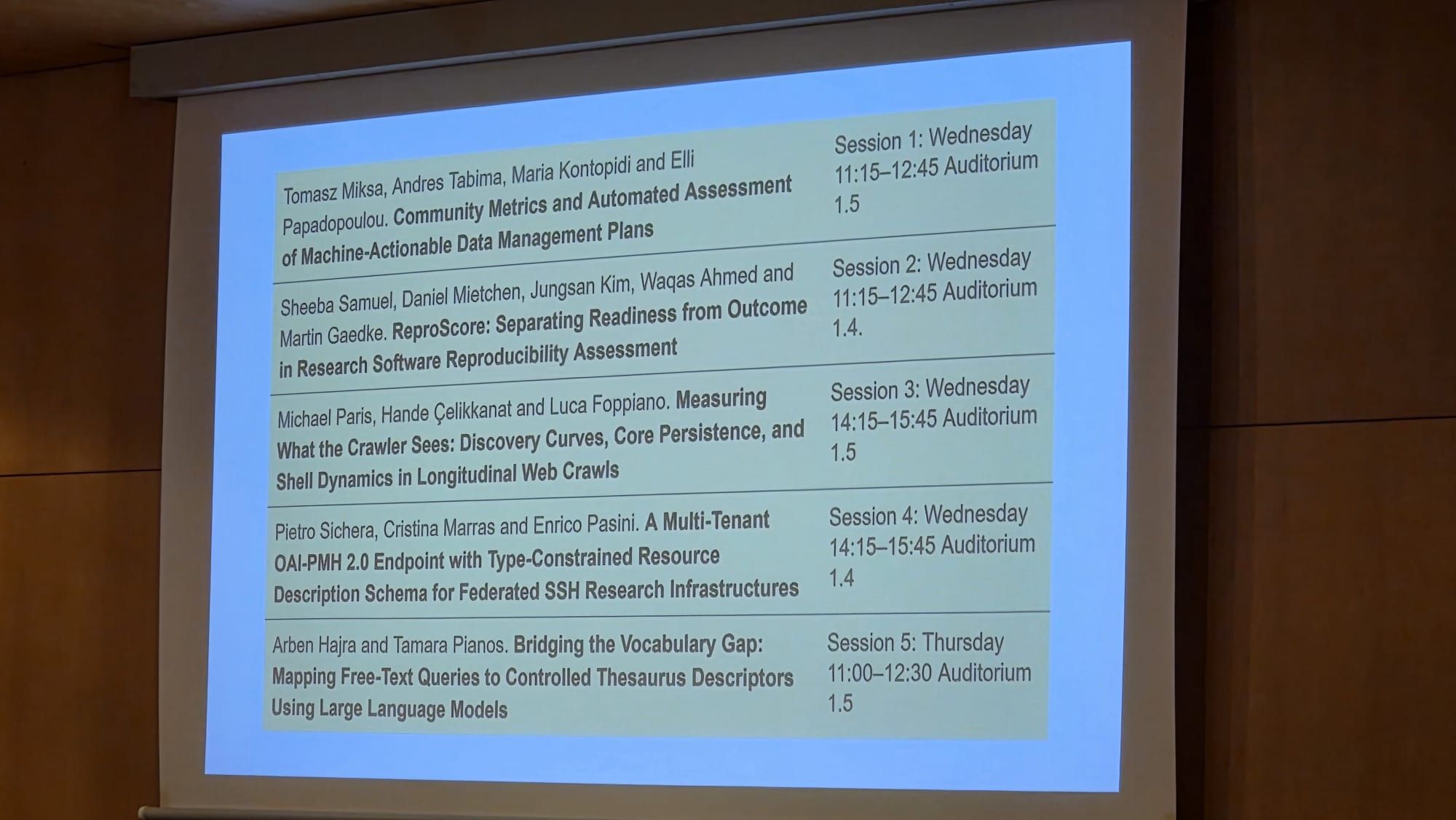
OSTrails contributed to the 30th International Conference on Theory and Practice of Digital Libraries (TPDL 2026) in Faro, Portugal, with the paper "Community Metrics and Automated Assessment of Machine-Actionable Data Management Plans". The paper was authored by Elli Papadopoulou, Tomasz Miksa, Andres Tabima and Maria Kontopidi. Tomasz Miksa presented the paper to the conference audience in a session on FAIR assessment.

IMG 20260923 WA0011

The presentation focused on the Data Management Plan (DMP) Evaluation Service, one of the core components of the OSTrails architecture alongside Scientific Knowledge Graphs (SKGs), DMP platforms, and FAIR assessment tools. Rather than focusing on technical details, the presentation explained how the project gathered requirements from its pilots and translated them into community-driven resources available online.This work contributes to the deliverable on the DMP Evaluation Service and addresses one of the topics being explored by the project’s pilots.

The paper addresses the challenge that funders’ criteria for evaluating DMPs are often too general to address the specific needs of individual research communities. Research communities seeking to establish more specific evaluation criteria need additional resources and guidance. The paper presents the DMP Evaluation Metrics Catalogue, which brings together 94 community-driven metrics and describes how machine-actionable DMPs can be assessed automatically using reproducible, machine-readable tests.

The paper was nominated for the Best Paper Award and received positive reviews. The paper’s presentation in a session on FAIR assessment highlighted the relevance of automated DMP evaluation and the broader assessment of data management practices.

IMG 20260923 WA0000

How OSTrails Findings Inform Related Research

Enhancing Machine-Actionable DMPs with Policy Entities Expressed in ODRL’, which was presented by OpenAIRE partners involved in the RAISE Suite project.The paper maps the RDA DMP Common Standard to ODRL constructs, enabling policy information to be formally represented in machine-actionable DMPs.The work was motivated by empirical evidence from OSTrails, which indicated that policy compliance is among the most frequently requested aspects of maDMP evaluation, while remaining difficult to automate. This provides an example of how requirements gathered through the OSTrails pilots can inform further research into making DMPs more actionable. Read more about the RAISE Suite contribution in the related news article.

NEXT STEPS

Next, the project will review the catalogue, define benchmarks tailored to specific research communities and pilot use cases, and develop additional tests.

"We're very happy to have been nominated for the best paper award. This reflects the good reviews we received. Our paper was presented in a session that in general focused on FAIR assessment, and this shows the relevance of our work, as there is still need for automated evaluation of DMPs and in general data management practices. The weather in Faro was great, which made this conference very enjoyable." - Tomasz Miksa

Read the full paper
  • Created on .
  • Last updated on .
  • Hits: 21

OSTrails 2nd Train-the-Trainer Bootcamp empowers trainers and multipliers across Europe

From 22 to 24 September 2026, OSTrails hosted the second edition of its Train-the-Trainer Bootcamp, bringing together 33 participants from 16 countries for an intensive online programme dedicated to strengthening capacities around machine-actionable Data Management Plans, FAIR assessment, and Scientific Knowledge Graphs.

While the first in-person edition was exclusively organised for members of the OSTrails consortium, this edition was open to the wider research community.

Designed for trainers, facilitators, and community multipliers, the bootcamp aimed to equip participants with the knowledge, skills, and resources needed to deliver training on OSTrails specifications and services within their own institutions and communities. The programme focused on enabling participants to explain the project's core concepts and interoperability frameworks, understand their mplementation requirements, and effectively demonstrate OSTrails tools and services in practice.

The training centred around the three pillars of the OSTrails project:

  • DMP-IF (Data Management Plan Interoperability Framework), supporting machine-actionable Data Management Plans (maDMPs);
  • FAIR-IF (FAIR Assessment Interoperability Framework), enabling interoperability and transparency across FAIR assessment services and methodologies;
  • SKG-IF (Scientific Knowledge Graph Interoperability Framework), promoting interoperability among Scientific Knowledge Graphs and related research information services.

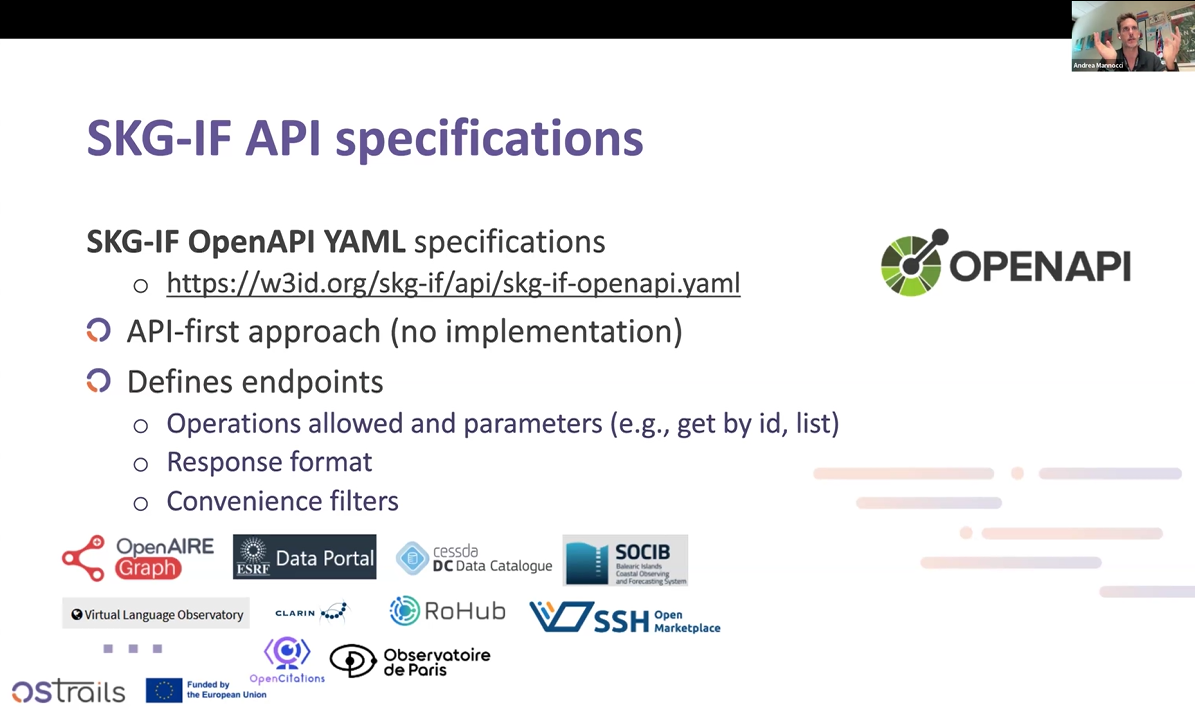
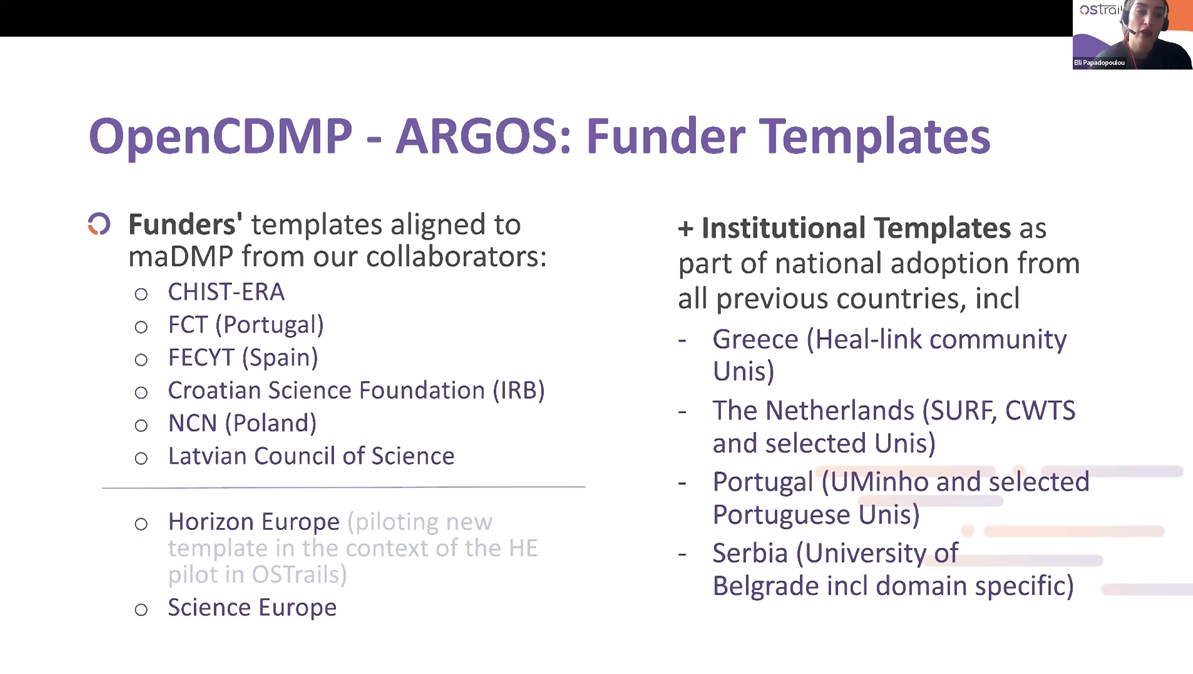
Over the three days, participants explored the OSTrails Interoperability Frameworks, the project's reference architecture, and the tools and services implementing the specifications. Demonstrations highlighted practical implementations through solutions such as ARGOS/OpenCDMP, the Data Stewardship Wizard and DAMAP for machine-actionable DMPs, FAIR assessment services and components, and SKG- based services, including the OpenAIRE Graph.

Screenshot 2026 09 22 211004Screenshot 2026 09 22 211052

 A distinctive feature of the bootcamp was its highly interactive format. During the Use Cases Café sessions, participants could join parallel discussions focused on machine-actionable DMPs, FAIR assessment, and Scientific Knowledge Graphs. These small-group exchanges enabled direct interaction with OSTrails experts, providing opportunities to discuss implementation challenges, explore adoption scenarios, and share experiences from different organisational and national contexts.

The programme also featured dedicated Training Stations, allowing participants to rotate between specialised discussion tables hosted by framework experts, tool developers, and service providers. Topics ranged from FAIR metrics, benchmarks, and assessment tools to maDMP solutions and Scientific Knowledge Graph services. This format created a unique opportunity for participants to engage directly with both the experts responsible for developing the OSTrails interoperability frameworks and the managers of tools and services that have already been implementing them.

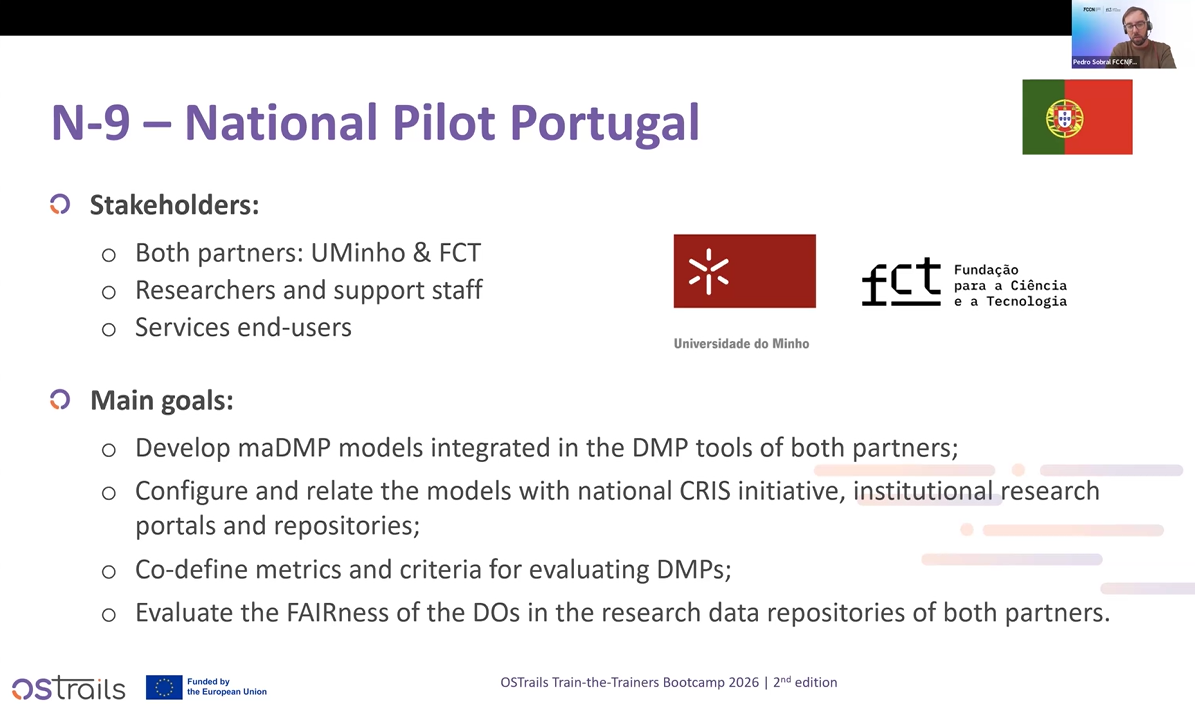
Additional sessions focused on real-world use cases and pilot implementations. Participants explored topics such as the development and evaluation of machine-actionable DMP templates, repository integration for maDMP archiving, interoperability with the OpenAIRE Graph and other Scientific Knowledge Graphs, and the co-definition of FAIR assessment metrics and evaluation criteria. These discussions demonstrated how the OSTrails frameworks can support practical research data management workflows and foster interoperability across diverse research environments.

Screenshot 2026 09 22 211525

The final day of the bootcamp was dedicated to translating knowledge into action. Working collaboratively in groups, participants developed training action plans tailored to their national, institutional, and disciplinary contexts. The resulting plans were presented during a dynamic closing session, showcasing concrete strategies for promoting the adoption and uptake of OSTrails frameworks, services, and best practices beyond the project consortium.

By combining expert-led presentations, practical demonstrations, peer learning, and collaborative exercises, the OSTrails Train-the-Trainer Bootcamp strengthened a growing international network of trainers and multipliers capable of supporting the adoption of interoperable approaches to Data Management Plans, FAIR assessment, and Scientific Knowledge Graphs. 

Screenshot 2026 09 23 151105

The participation of 33 professionals from 16 countries further reinforced the project's commitment to building a diverse and engaged community ready to advance open and interoperable research practices across Europe.

Screenshot 2026 09 23 105753 1

Useful links:
  • Created on .
  • Last updated on .
  • Hits: 61

OSTrails concludes Mentorship Programme highlighting key outcomes and activities

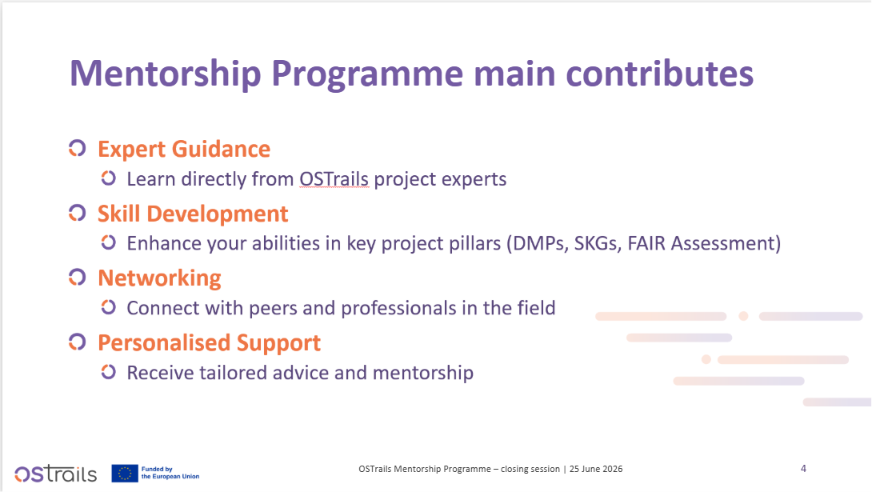
The OSTrails project organised a mentorship programme designed to promote learning and skills development in the project's core areas, namely machine-actionable Data Management Plans (maDMPs), FAIR Assessment of research outputs, and Scientific Knowledge Graphs (SKGs). Participants received personalised guidance, support, and opportunities to learn from the experiences of leading experts in the field.

The programme ran from September 2025 to June 2026, during which several mentoring sessions were held between mentors and mentees, organised according to the project’s core areas.

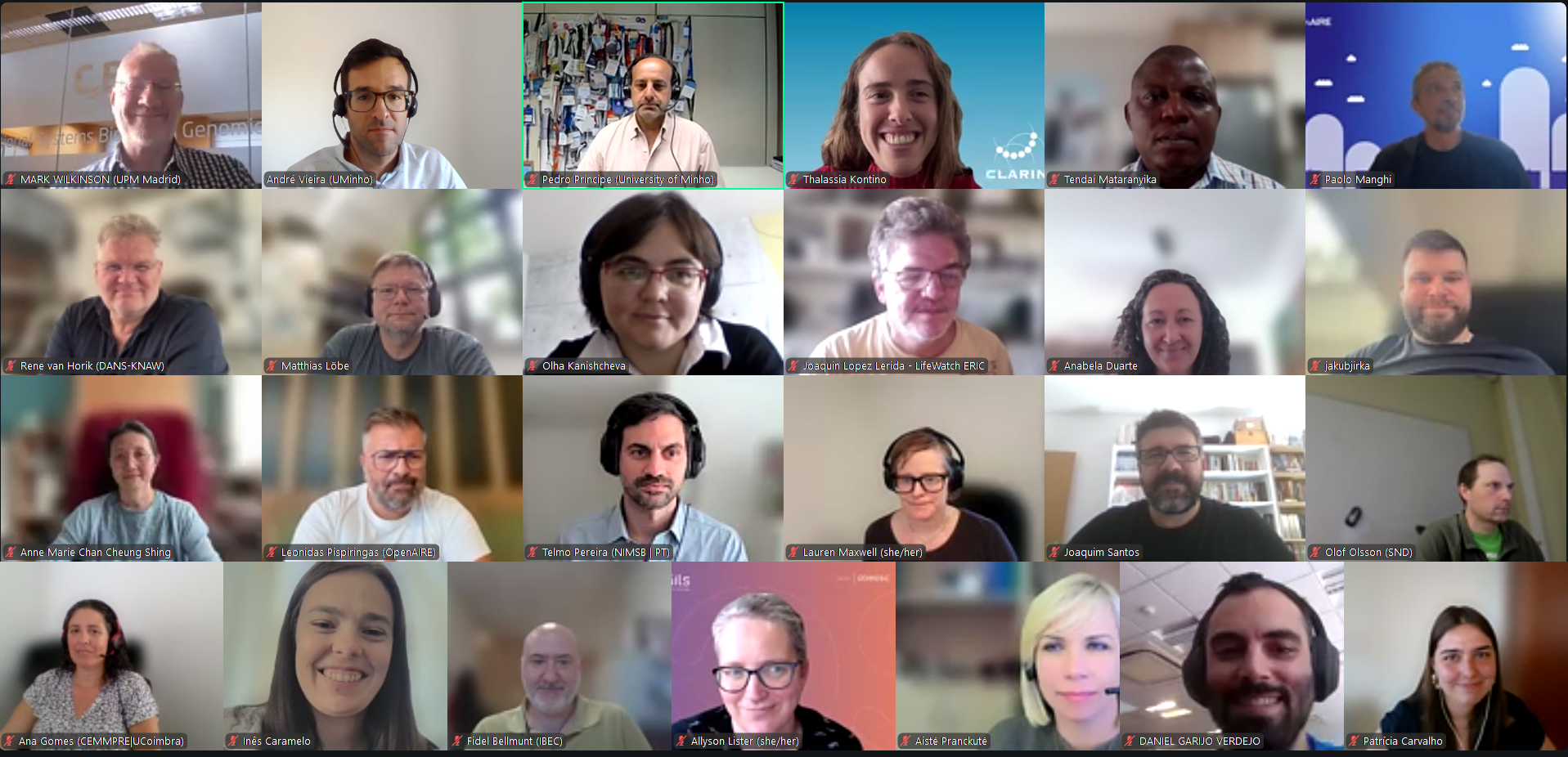
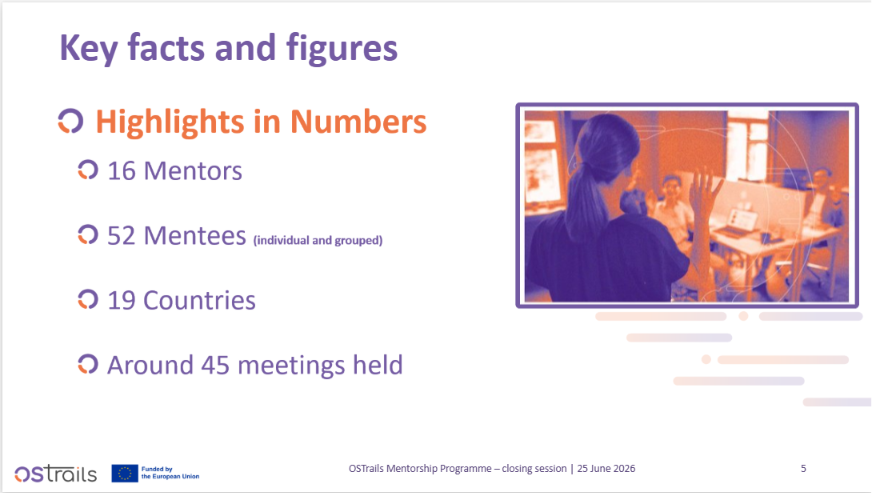
The mentorship programme brought together a global cohort, with approximately 45 meetings took place.

mentclo.jpeg

An introductory session was held to present the programme and allow mentors and mentees to get to know each other. In the following months, until June 2026, mentoring sessions took place and were scheduled according to the interests of the mentees, enabling them to engage with different mentors based on their areas of preference.

The programme concluded with a collective closing session at the end of June 2026, dedicated to presenting and reflecting on the results achieved, sharing feedback from both mentors and mentees on their participation experience, providing updates on the progress of the OSTrails project, and offering an overview of the training materials available and currently being developed. This session indicated the programme’s role in strengthening community capacity by supporting the adoption of best practices, the implementation of OSTrails services and specifications, and the consolidation of a European collaborative network centred on DMPs, SKGs, and FAIR assessment.

mentclo2.jpeg

The overall assessment presented during the session demonstrated that several key objectives had been achieved, particularly direct access to project experts, the enhancement of skills in key areas, the creation of networking opportunities, and tailored support aligned with participants’ needs.

The session also provided an opportunity to highlight the resources made available by the project, which serve as a foundation for supporting the implementation of OSTrails tools, services, and specifications, including documentation, GitHub, deliverables, and training resources.

It was also a moment to thank both mentors and mentees for their dedication, knowledge sharing, and the role of this collaboration in the growth of the OSTrails community, as well as in the personal and professional development of those involved.

In summary, the OSTrails mentorship programme has established itself as a key initiative for the project's core areas. Through expert guidance, personalised support, and networking opportunities, the programme not only fostered individual growth but also strengthened the professional community in the field. By enabling direct contact with experts and encouraging the exchange of practical knowledge, OSTrails contributed to the consolidation of best practices and the continuous development of its participants.

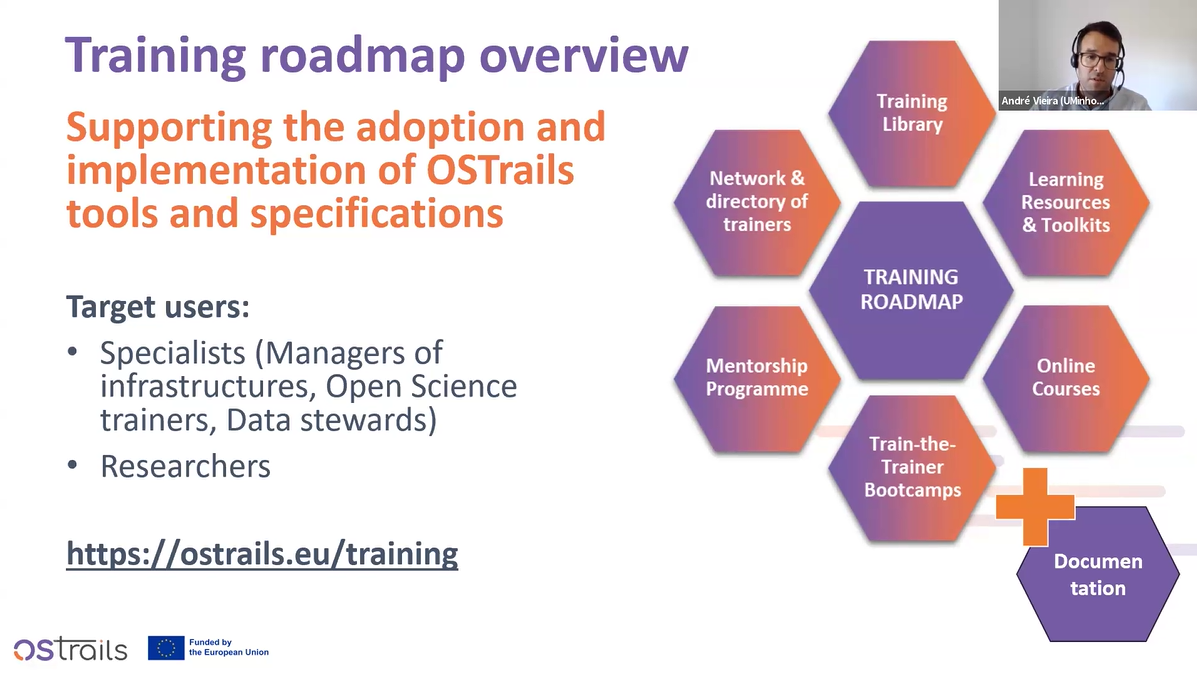
OSTrails training and support initiatives can be followed at: https://ostrails.eu/training

  • Created on .
  • Last updated on .
  • Hits: 866